Angie's List has awarded
CMG Sprinklers and Drains their top rating for customer service and list CMG with an "A" rating. CMG provides and installs:
french drains,
surface drains,
sprinkler installations and repair! Our
french drains and
sprinkler systems come with a
TWO YEAR WARRANTY on all parts and labor. In business now for over 20 years,
CMG is a
local company that takes great pride in delivering the best in customer service and quality work you can trust.
CMG services what we install and we are always a phone call away for all your
drainage and
irrigation needs.
405-226-0629. We service all of
Central Oklahoma including Edmond, Oklahoma City, Moore, Norman, Midwest City, Del City, Purcell, Blanchard, Newcastle, Mustang, Yukon
- Drainage System Installation in Norman
Drainage Systems take water from a
drainage problem area through a
Drain Pipe where it then is released through an
exit point such as a
Curb Fitting or
Pop-Up Emitter
. The Water enters the
drain pipe through some type of drain.
Drains that take in water in a
Drainage System are of the
Surface Drain type which has a Grate on top of some type or size of basin. Or
French Drain Style which absorb water through gravel above a perforated
Drain Pipe.
Standard
Surface Drains are 6 inch, 9 inch and 12 inch. Each size
Drain may have a Square or round Grate sitting on top of a
drain basin which is connected to a
drain pipe.
The size of the
Drain Basin and the size of the
Drain pipe dictate how much water can be moved and how fast
drainage can take place. A larger
Drain Pipe is always a better choice. A
12 inch Drain Basin with a grate connected to an exit point with
six inch Drain pipe move much more water than the same system with only
4 inch Drain Pipe. The
6 inch Drain Pipe moves many times more water than 3 inch or 2 inch
Drain Pipe. Larger
Drain Basins take more water into a
Drainage System as well.
French Drains always take in more water faster than
Surface Drain. A 4 inch
French Drain will take in and move a much higher volume of water than a
4 inch Surface Drain.
Key Points --
French Drains move more water than
surface Drains.
Larger
Drain Pipe move more water than Smaller
Drain Pipe
Using large
Drain Pipes with A
French Drain System moves the most water of all
Using 2 or more Exit points for the
Drainage System increases
Drainage Capacity.
Drainage Systems are not
Flood Prevention Systems. If Flooding allows flood water to rise above the exit point of a
Drainage System, water will not drain away because the exit point is under water. An exit Point that is way down hill from the
drainage system ensures drainage under most all situations. As long as the water has a place to drain to the
drainage system will function correctly.
Drainage Systems can be made up of one
drain or a combination of many
drains.
Drainage problems can be very complex. Complex
Drainage Problems may require a combination of several different types of
drains all inter-connected and working together. Other times the
drainage problem may be simple and straight-forward requiring only one
drain or several of the same type of
drain connected together.
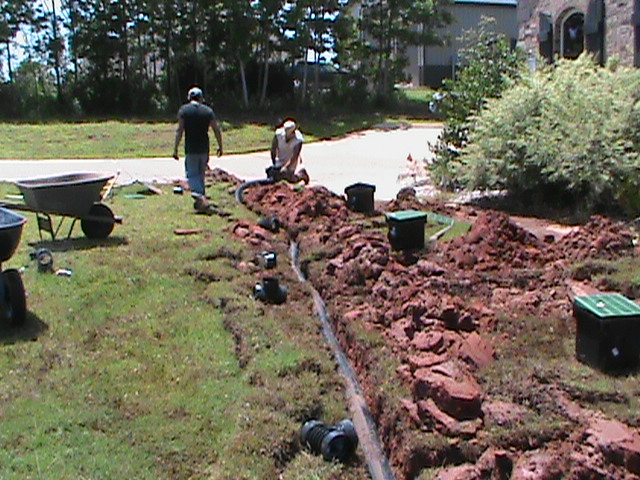
An example of a complex
drainage system would be: A
French Drain in the back yard connected to a
Surface Drain near a flower bed connected to several
gutter downspouts, which are connected to a
Channel Drain going across a driveway, which is connected to additional
Surface Drain in the front yard, which runs to a
Curb Fitting that lets all the water
drain out on to the street.
A simple
Drainage System might consist of a
Surface Drain that is connected to a second
Surface Drain which runs to a
Pop-up Emitter which lets
water drain over the curb and into the street.
An "Exit Point" is the term used for where all the water leaves the
Drainage System. Determining the Exit Point is very critical. It is one of the first things we do when
diagnosing a Drainage Problem.
Drainage Systems can:
1.
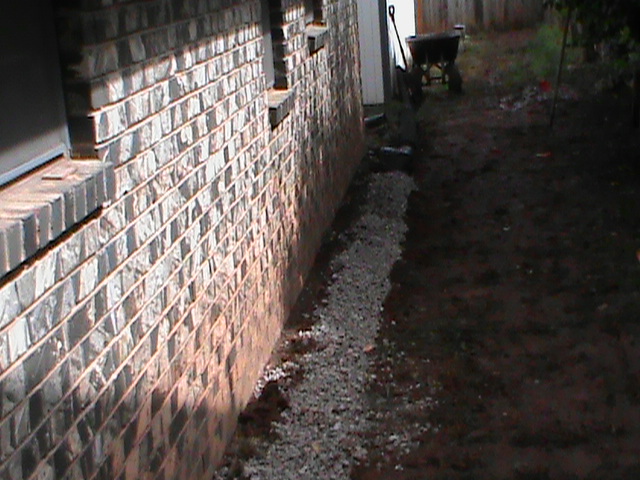
Keep water away from foundations -- A
French Drain is best because it can move
Surface Water and Sub-Surface Water (water moving under ground) away from the foundation. Many times less experienced companies install
Surface Drains to
keep water away from foundations. This can be a big mistake. A
Surface Drain can't move or
drain Sub-Surface Water. Also A
Surface Drain often can't move enough water fast enough and easily becomes overwhelmed during a heavy rain. A
Surface Drain also can't cover or protect a broad enough area.
Surface Drains should be designed in a
Drainage System to be located in smaller
Drainage Areas moving moderate amounts of water.
Surface Drains look better than
French Drains. If ,"appearance" is more important than Drainage Capacity, Go with the
Surface Drain.
Just know what you are getting into and what your expectations should
be. One side of a foundation alone, can be over 100 feet. A 4 inch or 6
inch French Drain is best when protecting a large area such as a
foundation.
2.
Keep water away from small or inclosed areas. This might be a low area
just through a gate on the side of a house, or the low area between a
flowerbed and the wall of a house, or standing water on or near a
sidewalk or driveway. These types of
Drainage Problems are best served with
Surface Drains. A
Surface Drain
can move water away from a low area that is relatively small. This can
occur in yards, flowerbeds, sidewalks and driveways. A
Surface Drain is designed to move
Surface Water away from a problem area to a predetermined exit point.
Surface Drains are available in many sizes. How quickly they remove standing water is usually determined by the size of the
Drain Pipe that is connected to the
Drain.
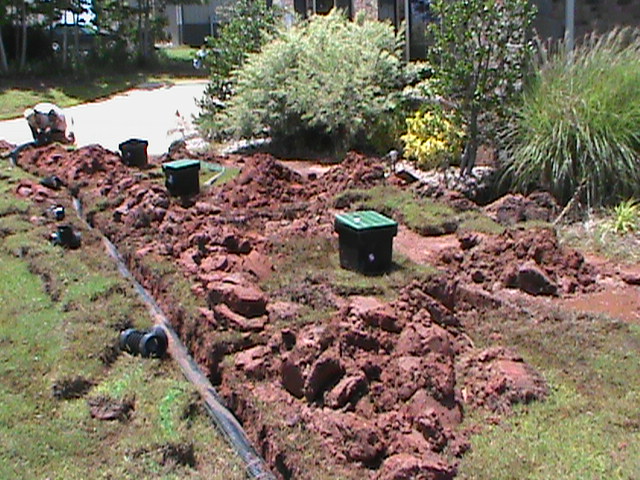
- Surface Drain Installation in Norman
- Don't let standing water or storm water run-off damage your home! CMG Sprinklers and Drains can help with Drainage Problems in and around your home or business. If you have water standing in the wrong place after a hard rain, a Drainage System can
be a great solution! If your sidewalk turns into a moat after a storm,
or if your back yard floods from run-off from your neighbor's roof give CMG a call. CMG can quickly diagnose your Drainage Problems and provide a solution. We incorporate several types of Drains in our Drainage System depending on the Drainage Problem. CMG installs: French Drain, Surface Drain, Channel Drains, Basin Drains, Trench Drains, and Sump pumps.We install Drains in lots of places including, Yards, Flower Beds, Driveways, Sidewalks, and next to Swimming Pools.
Just what is a "French Drain?" Many times people incorrectly use the phrase, "French Drain," to apply to many different types of Drains that could be used in a Drainage System. The term is widely used and many times incorrectly connected to "Surface Drains," or "Channel Drains."
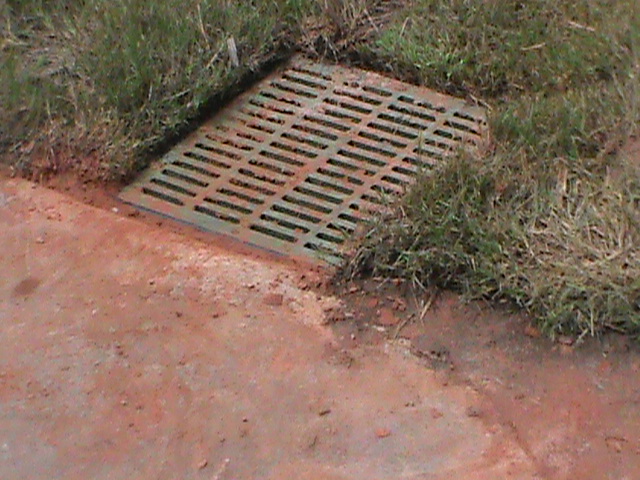
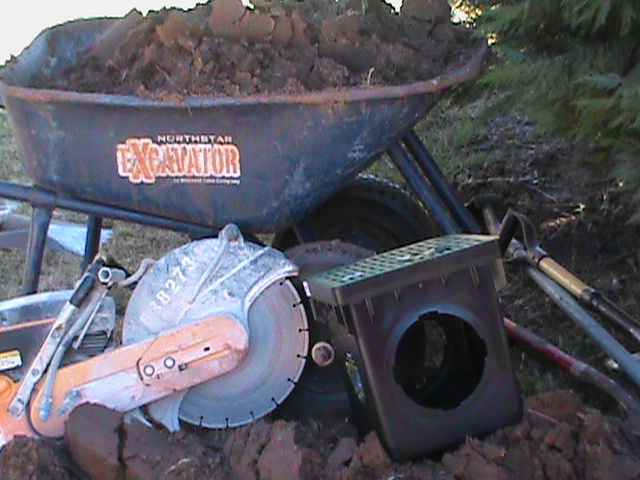
A Surface Drain has a grate that sits on top of a basin. The basin is underground. A Drain Pipe is connected underground to an outlet on the Drain Basin. Storm-Water Drains through the grate into the Drain Basin. Once in the Drain Basin, water travels out of the basin through a Drain Pipe. The Storm-Water continues downhill in an underground Drain Pipe to an exit point.
THIS IS NOT A FRENCH DRAIN!
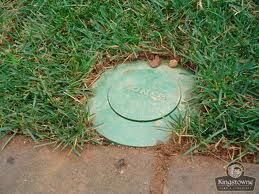
A Surface Drain may come in many different shapes or sizes. The Drain Grate may be round or square. Here is a picture of a common Surface Drain.
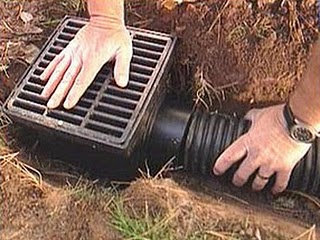
- Surface Drain and Drain Pipe
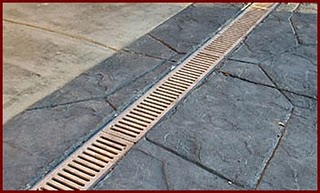
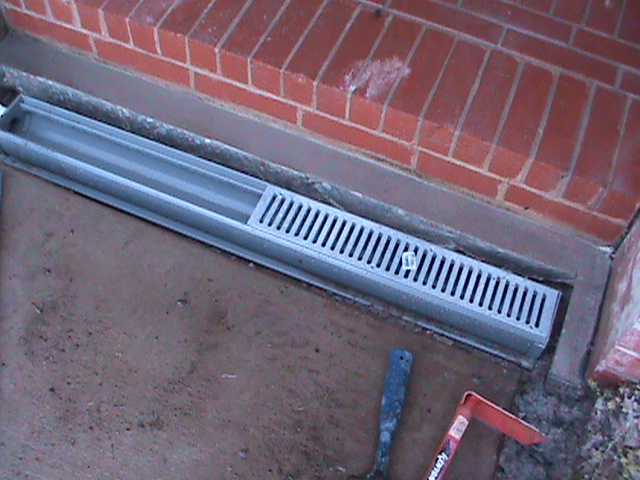
A Channel Drain is a type of Surface Drain and many times is installed in concrete across sidewalks or driveways.
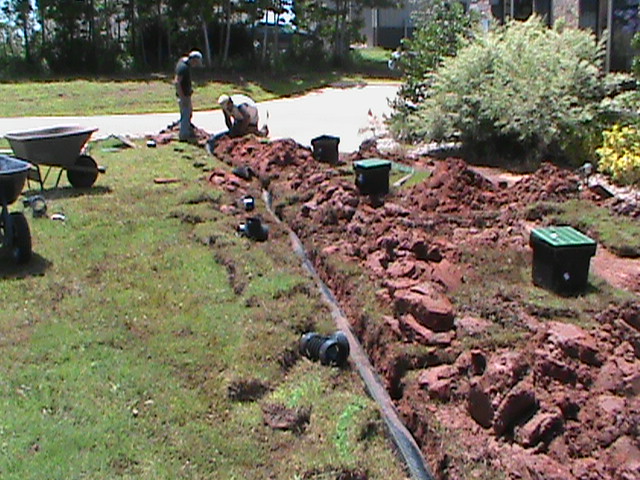
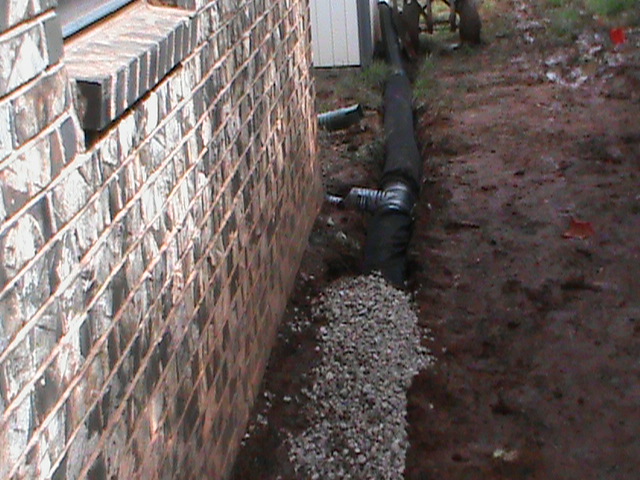
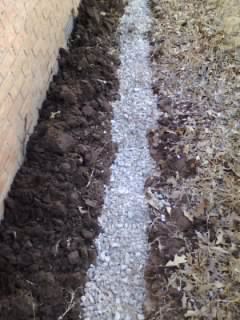
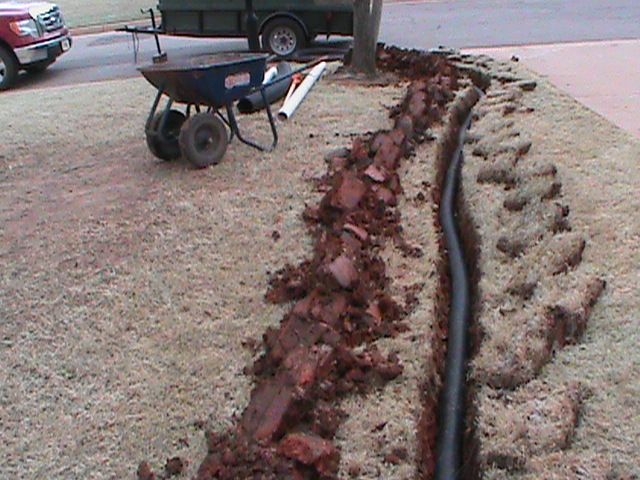
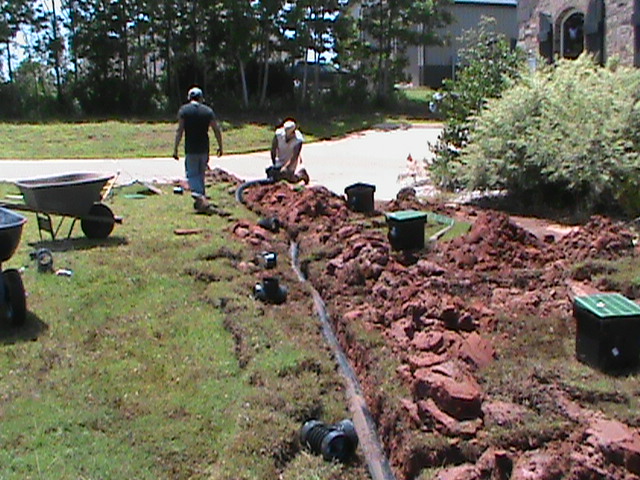
A French Drain is completely different from a Surface Drain. A basic French Drain consists of a Perforated Drain Pipe in the bottom of a trench. The Drain Pipe should have a neoprene sock around the Perforated Drain Pipe. This is to ensure that the Drain Pipe does not become clogged.
The
dirt that was taken out to make the trench is hauled away. It is
replaced by some type of small stone or gravel depending on what is
desired or available. I prefer crushed 1 inch lime stone. It is the
most economical option in my area. Pea Gravel or some other type of
small stone can work just as well. The lime-stone or gravel is placed
in the trench on top of the perforated Drain Pipe and filled all the way to the surface (ground level). In some cases where the French Drain needs to be deep or is being placed in sandy soil, a special trench liner must be placed in the trench before the perforated Drain Pipe or the Gravel are installed. This helps maintain the integrity of the trench over time. It also increases the cost of the French Drain and the amount of time to install it. I install a trench liner in a French Drain about 20% of the time. Most of the time a liner in not needed.
A
French Drain is
designed to handle a large volume of water and cover a large area. The
Drain is anyplace the trench goes. It has many applications and can be
used in many situations. It can be installed by itself or incorporated
into a
Drainage System with
Surface Drains or Gutter Down-Spouts connected to it.
The main downfall of a
French Drain is that they, for the most part aren't very pretty. They don't look very nice in a yard once they are completed.
Depending on the area the
French Drain is installed and the type of grass around the
French Drain, will dictate whether grass grows over the lime stone. Grass can grow up and through the gravel in the
French Drain over time eventually covering the gravel. This is Ok. It won't have a measurable effect on the performance of the
drain.
DONT COVER THE GRAVEL IN THE
FRENCH DRAIN WITH DIRT. THE
FRENCH DRAIN WON'T WORK IF THE TRENCH IS CLOGGED WITH DIRT. DON'T EVEN INSTALL IT IF YOU ARE GOING TO COVER IT UP WITH DIRT.
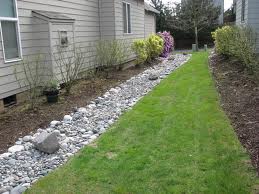
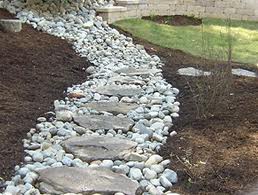
- French Drains Can Look Great!
- CMG installs Drainage Systems for home owners and Realtors who are in the process of selling a home. Sometimes a Drainage System must be installed before closing. We are more than happy to help!
- This concludes,"French Drains Oklahoma City, Drainage Systems, Surface Drains.
Simply put, a
Drainage System is one or a group of underground
Drain Pipes
that take water away from a place that has water standing on it or
flowing across it. The water that is in the problem area, can be
causing damage or may be inconvenient or both. (Usually Both) A simple
Drainage System is a
Drain for the water to enter, a
Drain Pipe to move the water away from the
Drain, and an
Exit Point for the water to be released out of the
Drain Pipe.
Drainage Systems quickly can become more complicated. Considerations must include:
How does the water get to the problem area? There may be one or many sources.
Water Sources:
1. It falls from the sky directly
2. It flows down hill over the surface (surface water)
3. It flows underground under the surface (sub-surface water)
4. It flows from the edge of a roof ( There may be many roofs near the problem area, neighbors etc.)
5. It flows from a
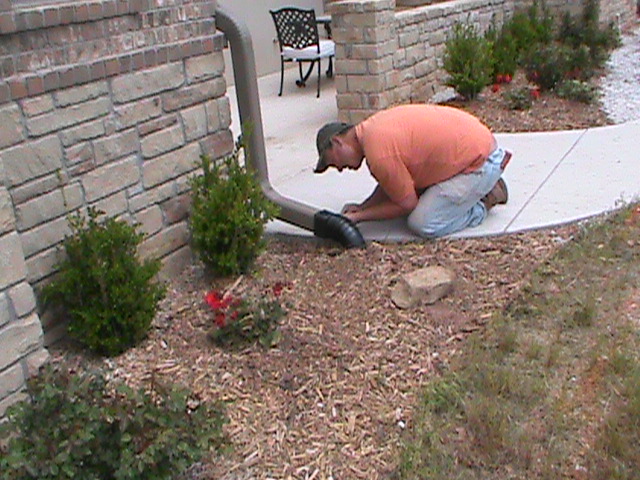
gutter downspout
6. It flows over the edge of a gutter because the gutter is too small is is clogged
7. It flows up from the ground (seeps and springs are common in Oklahoma)
8. It flows from a
sprinkler system use ( yours or your neighbors)
9. It flows from a leaking pipe ( water mains, water meters, water lines, sprinkler pipes, sprinkler valves)
There are other reasons for
Drainage Problems, the above reasons are just the most common.
Once
the number of water sources is determined, a rough estimate of the
amount of water that needs to be drained away on average must be
estimated. This can be simplified down to "SMALL, MEDIUM, OR LARGE
AMOUNTS OF WATER TO BE DRAINED AWAY. You don't have to be an engineer
trying to calculate fluid dynamics. Experience at
diagnosing drainage problems helps however. How much water needs to be moved will help determine the type and size of the
Surface Drain or
French Drain that needs to be installed. It also helps to determine the size of
Drain Pipe required for the
Drainage System. A good rule to follow is, "If in doubt, install a larger
Drain and
Drain Pipe." Unused
Drainage Capacity is better than property damage caused by a
Drain that is overwhelmed by too much water.
For home and small business use typical materials used are:
6 inch, 9 inch, and 12 inch
Surface Drains -
3 inch, 4 inch, and 6 inch
Drain Pipes --
3 inch, 4 inch, and 6 inch
French Drains --
French Drains move more water than Surface Drains --
French Drains move
Surface Water and Sub-Surface Water
Surface Drains move Surface Water only
Surface Drains look nicer than French Drains in most cases
Once the type and number of drains is determined and what size
Drain Pipe will connect them, an exit point must be selected. (Where is the
Drainage System going to take the water to and release it?)
The
Drainage Curb Fitting is installed when the desired exit point for the
French Drain will release the
Drainage Water into the Street. The
Drainage Curb Fitting
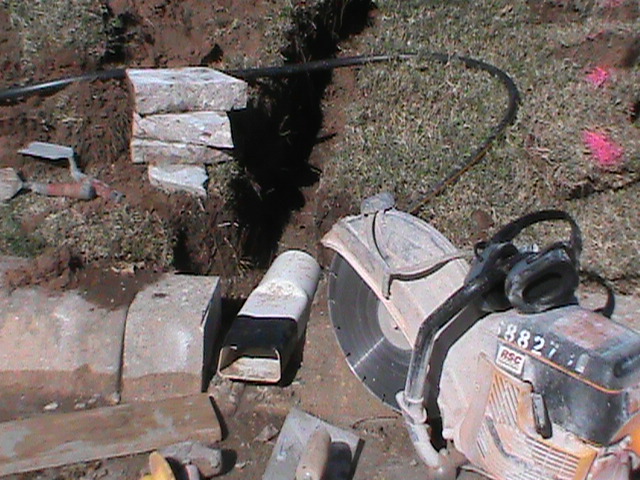
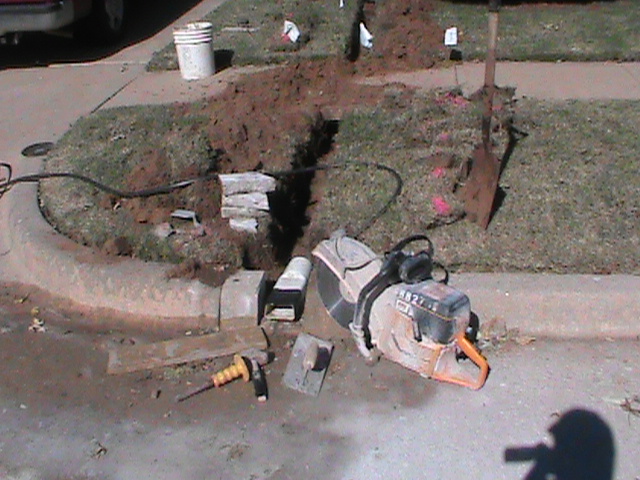
is rectangular in shape and made to be installed through the curb. A
small section of Curb is cut out with a concrete saw. The Section is a
few inches wider than the
Drainage Curb Fitting. We then install new concrete around the curb fitting. Once the concrete has dried, the
Drain Pipe coming from a
French Drain or
Surface Drain is connected to the
Drainage Curb fitting and then covered with dirt.
The
Drainage Pop-Up Emitter is connected to the end of a
Drain Pipe. It is downhill from a
French Drain or a
Surface Drain.
It is a small release basin with a green pop-up lid. When releasing
water, it pops up about an inch to release the water from the
French Drain or
Surface Drain. When the
Storm Water has moved through the
Drainage System and out of the
Pop-Up Emitter,
the green lid closes back to its original closed position. The emitter
is designed to release water out into a yard or down a hill or other
desirable
Drainage Exit Point where there is no curb.